
PIPs that get filed and forgotten
Most plans begin with good intent, then drift because no one owns the cadence, evidence, or next review date.

Performance Plans
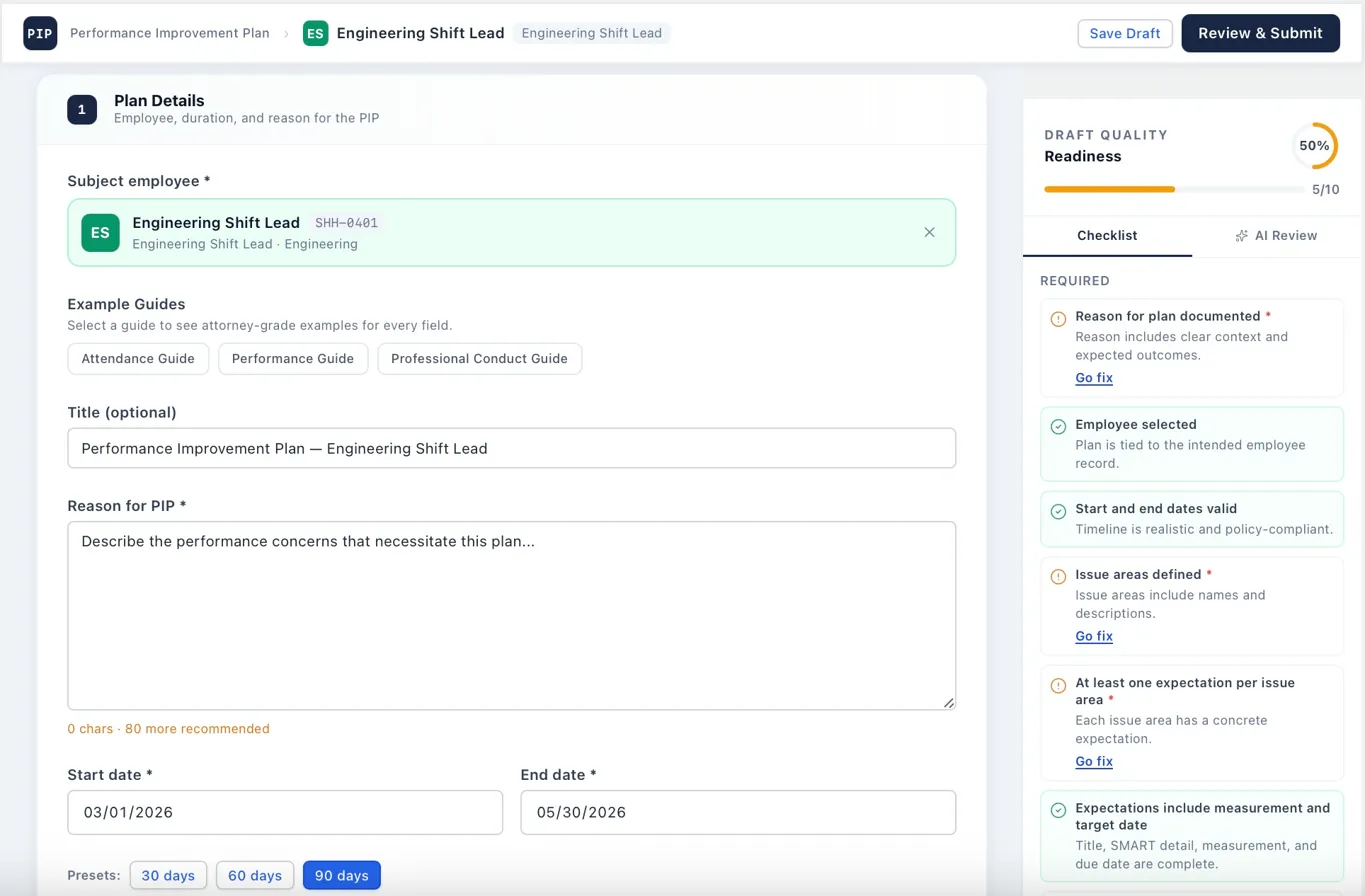
Verdan gives your team a repeatable framework for goals, checkpoints, accountability, and progress tracking — so improvement plans actually drive improvement.
PIP Timeline
Verdan keeps goals, check-ins, edits, reminders, and final outcomes attached to the plan so HR can see what happened without reconstructing the record.
The Problem
A PIP should be a structured path to improvement. Instead, too many plans begin as a loosely worded document, lose their check-in rhythm, and leave HR reconstructing the story at the end.
Most plans begin with good intent, then drift because no one owns the cadence, evidence, or next review date.
Every manager defines “improvement” differently. Without a framework, PIPs become subjective — and indefensible.
When a plan ends, HR needs the goals, check-ins, notes, missed milestones, and outcome in one record.
How Verdan Solves It
Define clear, measurable improvement goals tied to specific issue areas. Plans can be scoped to common 30-, 60-, or 90-day windows based on company policy.
Verdan builds a check-in cadence into every plan, such as Week 2, Week 4, Day 60, and Day 90 reviews. Managers get prompted before each touchpoint.
Missed a check-in? Verdan flags it before it becomes a gap. Overdue milestones surface automatically so managers stay on track.
Every check-in captures progress notes, blockers, and manager assessments. At the end, HR can close successful, extend, or move into the next workflow.
The Impact
See how Verdan structures every PIP with goals, check-ins, and accountability built in from day one.